How much smartphone storage do you need?
Every phone purchase runs into the same question, and nobody answers it straight: 128 GB, 256 GB, or more? Choose too small and you spend three years deleting things to make room. Choose too large and you pay for space you never touch.
One distinction clears up most of the confusion. The capacity a phone is sold with and the capacity a person fills are two different measurements, and only one of them is about you. In practice, most people use far less than they buy.
Brand matters less here than you would expect. Region matters less still. What decides your answer is your own working set, and that is a number you can work out in about two minutes before choosing your next smartphone.
What the evidence says about smartphone storage use
The strongest recent measurement looked at 10,000 Android flagship phones, all of them 128 GB models. Average use came to about 32% of capacity, which works out at roughly 41 GB. Almost half the phones held less than 35 GB. Only about 5% passed 90 GB. The full range ran from around 4 GB to around 110 GB.
That spread matters as much as the average, and one caveat belongs in the same breath: the phones had been on sale about a year, owners had kept them for different lengths of time, and the study did not disclose which region they came from. It shows the spread inside one group of phones, not a world average.
refurbed's own sales record points the same way from a different angle. Across more than 1.2 million refurbished smartphones sold, 59% were 128 GB and 22% were 256 GB. Another 13% were 64 GB. Only 3.9% were 512 GB and 0.6% were 1 TB, so roughly 93% of everything sold sits at 256 GB or below.
Two datasets, one conclusion: the gap between people is enormous. That is why a single recommended number is the wrong shape of answer.
What fills up your phone storage
Four things compete for the space, and they do not compete evenly.
The system takes its cut first. Apple puts a current standard iOS 26 configuration at roughly 12 to 24 GB once its features and removable apps are counted, with about another 7 GB when Apple Intelligence is switched on. Android's footprint is less standardised and shifts with the manufacturer and its bundled software, which is why two Android phones both labelled 128 GB can hand you different amounts of usable space.
Apps grow after you install them. A download size in the store tells you almost nothing. Caches, databases, offline maps and downloaded media keep accumulating, and an academic Android study found app data making up close to half the measured storage in its detailed sample. Its absolute figures date from 2021 and are long out of date, but the structure holds: what an app becomes matters more than what it arrives as.
Photos and video swing the widest. Two people with identical libraries can need completely different local space, because iCloud Photos can keep full-resolution originals in the cloud and leave smaller copies on the phone, and Pixel's Smart Storage can clear backed-up photos and videos when room runs short. For the file sizes in detail, the phone camera versus dedicated camera comparison works through them.
Games and offline media create the heavy tail. A large game can take tens of gigabytes once its assets and updates land. Downloaded series, playlists, podcasts and maps turn something you were streaming into something you are storing. These habits, not messaging and browsing, separate a 128 GB owner from a 512 GB one.
Does an iPhone need more storage than an Android phone?
No. The assumption is widespread, and the data does not support it.
Across refurbed's own sales, Apple buyers took 128 GB 58.8% of the time, out of 832,274 phones. Samsung buyers took 128 GB 58.5% of the time, out of 318,007. Same median capacity, and the two shares land within a third of a percentage point of each other across more than 1.15 million phones between them. Google phones are the most concentrated of the lot: 86.7% of them sell at 128 GB.
Two brands do sit higher. Xiaomi buyers take 256 GB 42.7% of the time and Oppo buyers 53.5%, both landing on 256 GB as their median. Both samples are much smaller here, and both brands ship capacity-generous configurations at their price points, which is a difference in what is on sale rather than in what people store.
The wider research arrives at the same place from the other direction: no robust public dataset shows iPhone owners consuming substantially more storage than Samsung or other Android owners. What differs between brands is the configuration mix, not the person holding the phone.
Three phones from the same year make the point concrete. All launched in 2023, and each takes a different route to the storage question. On refurbed, the Galaxy A54 5G sells 82% at 128 GB, the Pixel 8 sells 91% at 128 GB, and the iPhone 15 sells 73% at 128 GB with 22% at 256 GB.
Three phones, three approaches to smartphone storage
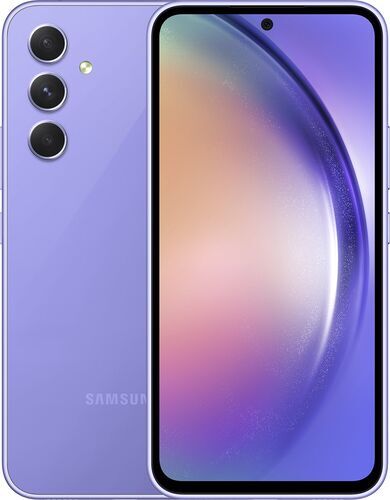
Year of release
2023
Screen size
6.4 in
Main camera
50 MP
Front camera
32 MP
Battery
5000 mAh
Processor
Samsung Exynos 1380
Operating system
Android 13 and higher
Wired transfer
USB-C 2.0
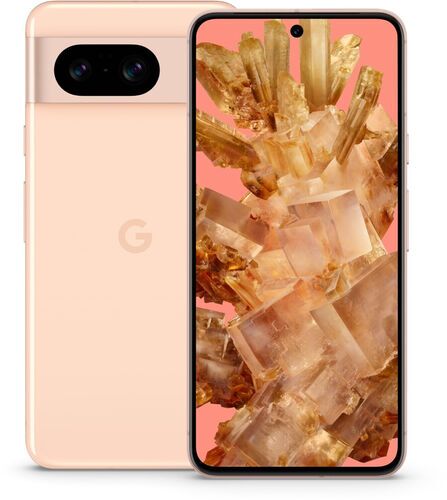
vs.
2023
6.2 in
50 MP
10.5 MP
4575 mAh
Google Tensor G3
Android 14 and higher
USB-C 3.2
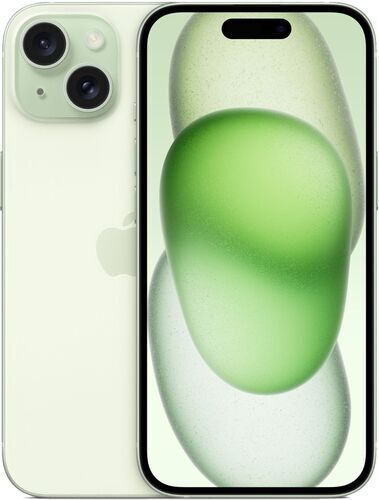
Expandable storage: which phone brands still take a memory card
One brand difference does change how much internal storage you need, and it runs the opposite way to the assumption.
Counting the 434 phones in refurbed's catalogue that list a memory-card specification, 294 of them, about 68%, accept a card. Sony manages 13 out of 13 and Nokia 9 out of 9. Samsung sits at 89 of 120, Motorola at 34 of 50, Xiaomi at 46 of 71 and Oppo at 22 of 26. Apple is 0 of 14. Google is 0 of 12.
A card slot changes the shape of the decision, because internal capacity stops being permanent. Fill the phone in year three and you add space for the price of a card instead of the price of a phone. The brands most associated with premium storage tiers are exactly the ones that leave no way out.
One honest limit keeps this useful. A memory card handles photos, video, music and offline media well. It is not a substitute for internal storage when it comes to apps and system files, so a card does not turn a 64 GB phone into a 512 GB one. Card support varies by model, so the specification is worth checking on the listing.
Smartphone storage by region: what the numbers can and cannot show
Start with what is missing. No current public study measures filled local storage with one consistent method across Europe, North America and Asia. Everything on offer is a proxy, and the proxies measure something else.
The first proxy is operating-system mix. StatCounter put North America at 60.2% iOS and 39.8% Android in August 2026, Europe at 62.7% Android and 37.3% iOS, and Asia at 78.1% Android and 21.8% iOS. Those counts are web page views, not devices and not people.
The second is network traffic. Ericsson recorded about 25 GB a month per active smartphone in North America at the end of 2025, 25 GB in Western Europe and 23 GB in Central and Eastern Europe, 37 GB across India, Nepal and Bhutan, 23 GB in Northeast Asia and 21 GB in Southeast Asia and Oceania.
That second set is where most regional claims go wrong. Streaming 25 GB leaves almost nothing behind. Downloading 25 GB fills a phone. Traffic and storage are not the same measurement.
Read as distribution rather than need, the picture is modest. North America skews to larger capacities because its device mix is more premium. Europe's broader mid-range mix keeps both 128 GB and 256 GB relevant, with wide variation between countries, which is why refurbed carries both tiers in volume across its European markets rather than pushing one. Asia is far too varied for a single profile: an older analysis of photo libraries found South Korea and Malaysia among the most photo-heavy markets and Vietnam among the lowest, and while it is too dated and too self-selected to put a gigabyte figure on, it makes the point that a continent is not a user type.
Why smartphone storage keeps growing
Sort refurbed's sales by the year each phone launched and the trend appears on its own. For 2016 devices, the median capacity bought is 32 GB. For 2017 and 2018 phones it is 64 GB. From 2019 through 2023 it settles at 128 GB. For 2024 and 2025 phones it is 256 GB.
The sharper version is the 128 GB share. It peaks at 75.3% for 2021 devices, then falls to 67.2% for 2022, 58.5% for 2023, 47.2% for 2024 and 40.0% for 2025.
Nothing about how people take photos changed between 2021 and 2025 to explain a fall like that. What changed is the base configuration manufacturers shipped. TrendForce expects average capacity to keep rising through 2026 and calls 256 GB the emerging mainstream configuration, driven by memory supply, manufacturer positioning and on-device AI rather than by any demonstrated need, with iPhone capacity climbing faster after the iPhone 17 moved to a 256 GB base.
Individual models show the same mechanism. The iPhone 12 splits almost evenly, 46% at 64 GB and 45% at 128 GB, because 64 GB was its entry configuration. The iPhone 13 sits at 81% on 128 GB, because its entry configuration moved.
The heavy tail is real, it is just small and concentrated at the top. The iPhone 15 Pro Max sells 80% at 256 GB, and the Galaxy S23 Ultra splits 50% at 256 GB and 46% at 512 GB.
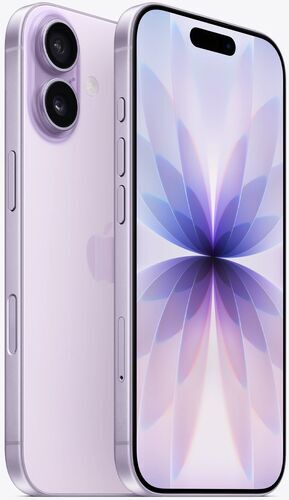
Which storage size fits your life?
One thing needs saying before the profiles: these are habits, not age groups. Two people born the same year, one who films everything and one who photographs almost nothing, land on completely different capacities. Age is not the variable. What you do with the phone is.
Student or first phone. Heavy social media, plenty of photos, most of them backed up, a moderate app collection and an intention to keep the phone for years. 128 GB with cloud backup switched on is comfortable. Step up to 256 GB if the phone has to last five years.
Parent or family buyer. Photos and video of children, almost nothing ever deleted, often several devices sharing one account. Video is the multiplier here, and 256 GB is the comfortable choice.
Media-heavy or gaming user. Several large games installed at once, series and playlists downloaded for commutes and flights. This is the real heavy tail. 256 GB is the floor, and 512 GB is the honest answer if you keep little in the cloud.
Light user or long-term keeper. Messaging, calls, occasional photos, little app churn, and a phone you expect to hold on to. 128 GB is comfortable. 64 GB still works with disciplined cloud use, though it grows more fragile as system and app sizes climb.
The rule underneath all four: buy for the working set you can describe, plus headroom. Not for the tier on the shelf.
Work out your own smartphone storage number
Open your phone's storage settings and note what you use now. Add realistic annual growth multiplied by the number of years you plan to keep the phone. Divide that total by 0.8, which leaves about 20% free for updates and temporary files. Round up to the next capacity offered.
A worked example: 70 GB in use today, growing 10 GB a year for another three years, gives 100 GB of content. Divided by 0.8 that comes to 125 GB. A 128 GB phone would be borderline, and 256 GB removes the need for regular housekeeping.
The 0.8 divisor is a planning rule of thumb rather than a manufacturer requirement, so treat the result as a floor with some comfort built in.
One correction cuts both ways. A snapshot of a new phone understates what you need if you carry everything forward from phone to phone over five years or more. Accumulated cache overstates it, because part of that is reclaimable at any time.
Buying the smartphone storage you need, refurbished
Refurbished devices are professionally checked, cleaned and reconditioned before they go on sale, and they are hard to tell apart from new. For the storage decision specifically, that changes four things.
The capacity step becomes affordable. Once a phone is no longer new, the gap between its 128 GB and 256 GB versions narrows, so moving up a tier costs a fraction of what the same move costs at launch.
You pick the capacity instead of inheriting it. Most people end up with whatever the base configuration happened to be in the year their phone launched. Choosing from stock breaks that pattern.
A phone you keep longer needs the headroom more. A bigger working set takes time to build up, so capacity matters more on a phone you intend to hold on to than on one you will replace in two years.
Running out of space is a poor reason to replace a phone. Getting the capacity right at the start is what avoids that decision entirely.
Capacity options vary by seller and availability changes, so check the current options on refurbed.
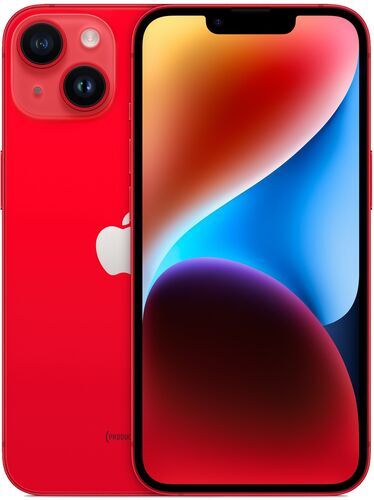
The environmental case for a refurbished smartphone
Each refurbished smartphone sold on refurbed carries verified environmental savings compared to buying new. Based on scientific research by Fraunhofer Austria (ISO 14040/14044 verified):
↓ iPhone 15: SAVED 63.41 kg CO₂e | 23,762.9 L water | 143.9 g e-waste
↓ Google Pixel 8: SAVED 75.4 kg CO₂e | 28,053.7 L water | 155 g e-waste
↓ Samsung Galaxy A54 5G: SAVED 82.1 kg CO₂e | 30,451.1 L water | 167.3 g e-waste
Does a larger capacity cost more to make? Not measurably, on this data. Fraunhofer reports a saving per device rather than per memory chip, and within a single model the figure barely moves with capacity: across 464 like-for-like comparisons, where the same phone appears at two adjacent capacities, 80% report an identical saving and the median difference is zero. The refurbished unit's own reported footprint clusters around 14 kg CO₂e whatever the capacity.
Read it carefully, because it is a limit as much as a finding. The study models the device, not the storage component, so a small capacity-related difference could sit below what the method resolves. What the data does support is the practical point: on a refurbished phone, choosing 256 GB over 128 GB carries no measured environmental penalty, so the capacity decision can be made on what you store.
Frequently asked questions about smartphone storage
Is 128 GB still enough for a smartphone in 2026?
Yes, for most people. The strongest recent measurement of 128 GB phones found an average of about 41 GB in use, and 59% of the refurbished smartphones sold through refurbed are 128 GB. Go higher if you install large games or keep a lot of offline media.
What is the difference between 128 GB and 256 GB in practice?
Behaviour, not gigabytes. 128 GB covers messaging, social media, ordinary photos and a moderate app collection. 256 GB suits a growing video library, several large games at once, downloaded media, or a phone you plan to keep for five years.
Do I need more storage on an iPhone than on an Android phone?
No. Apple buyers chose 128 GB 58.8% of the time and Samsung buyers 58.5%, across more than 1.15 million refurbished phones. The difference between brands is which configurations are on sale, not how much people store.
Is a refurbished phone a good way to get more storage?
Yes, and an older model is often the smarter buy, because the price gap between capacity tiers narrows once a phone is no longer new. Every device arrives with a seller test report confirming it is fully functional, a condition grade, a minimum 12-month warranty and a 30-day trial.
Find your next refurbished smartphone on refurbed
Every phone on refurbed is professionally tested before it ships, graded for appearance from Good to Premium, and covered by a minimum 12-month warranty and a 30-day trial. Battery status is shown at purchase, so you know what you are getting.
Pick the capacity that fits your working set, not the one that happened to be standard the year the phone launched.

Sign up for our newsletter for the first time and save 400 Kč!
Never miss an offer again.
Information about the use of personal data can be found in our Privacy policy.
Get the refurbed app
For iOS and Android


Confirm sign-up
Click the link in our confirmation e-mail to receive your voucher. It will be applicable to purchases from 5000 Kč.
- © Refurbed Marketplace GmbH
- Accessibility
- T&C
- Privacy Policy
- Imprint
- Legal Notices
- European Data Act
- Cookie Policy